Embark on a journey exploring the realm of Contract Management Software for Procurement Teams, a vital tool revolutionizing the way businesses handle contracts and streamline procurement operations.
Delve into the world of efficiency and organization as we uncover the key aspects of this essential software.
Introduction to Contract Management Software for Procurement Teams
Contract management software is a digital solution designed to help procurement teams efficiently organize, track, and manage contracts throughout their lifecycle. It plays a crucial role in ensuring compliance, reducing risks, and optimizing the procurement process.
Streamlining Procurement Processes
Contract management software streamlines procurement processes by centralizing all contract-related information in one secure platform. This allows procurement teams to easily access key contract details, track important dates, and collaborate effectively with stakeholders.
Benefits of Using Contract Management Software
- Improved Efficiency: Automating contract processes saves time and reduces manual errors, enabling procurement teams to focus on strategic tasks.
- Enhanced Visibility: Real-time insights and reporting features provide visibility into contract status, performance, and potential risks.
- Compliance Management: Ensure adherence to regulatory requirements and internal policies, reducing legal and financial risks.
- Cost Savings: By optimizing contract terms and monitoring vendor performance, organizations can achieve cost savings and improve vendor relationships.
- Audit Trail: Maintain a complete audit trail of contract changes, approvals, and communications for accountability and compliance purposes.
Key Features of Contract Management Software
Contract management software offers a range of key features that are specifically beneficial for procurement teams. These features help streamline processes, increase efficiency, and improve overall contract management within the procurement function.
Automation Tools for Efficiency
- Automated contract creation and templates: Contract management software allows procurement teams to quickly generate contracts using pre-defined templates, reducing manual work and ensuring consistency across documents.
- Automated alerts and notifications: The software can send reminders for contract renewals, important dates, or any actions needed, helping procurement teams stay on top of deadlines and obligations.
- Automated approval workflows: With automated approval processes, contracts can move through the necessary steps more efficiently, reducing bottlenecks and ensuring timely approvals.
Integration Capabilities with Other Procurement Tools
- Integration with procurement systems: Contract management software can integrate with existing procurement tools and systems, allowing for seamless data transfer and a more unified procurement process.
- Integration with e-signature platforms: By integrating with e-signature solutions, procurement teams can streamline the signing process, eliminate the need for physical signatures, and reduce turnaround time for contracts.
- Integration with project management tools: Connecting contract management software with project management tools enables better coordination between contract requirements and project deliverables, ensuring alignment and efficiency.
Implementation and Integration of Contract Management Software
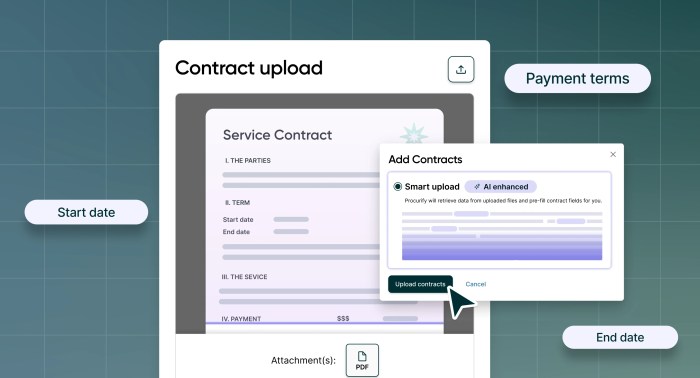
Contract management software can greatly enhance the efficiency and effectiveness of procurement teams. However, successful implementation and integration are crucial for maximizing the benefits of such tools. Here is a step-by-step guide on how to implement contract management software within a procurement team, along with challenges that may arise and best practices to overcome them.
Step-by-Step Guide for Implementation
Implementing contract management software requires careful planning and execution. Here are the key steps to follow:
- Assess Current Processes: Evaluate your current procurement processes and identify areas where contract management software can add value.
- Define Objectives: Clearly define your objectives for implementing the software, such as improving contract visibility, enhancing compliance, or reducing risks.
- Select the Right Software: Choose a contract management software that aligns with your team's needs and requirements.
- Training and Onboarding: Provide adequate training to your team members on how to use the software effectively.
- Data Migration: Ensure seamless migration of existing contract data to the new software without any loss or errors.
- Testing and Optimization: Conduct thorough testing to ensure the software functions as intended and optimize its performance.
- Continuous Improvement: Regularly review and refine your processes to maximize the benefits of the software.
Challenges and Solutions
During the integration process, several challenges may arise, such as resistance from team members, data security concerns, or compatibility issues with existing systems. Here are some solutions to overcome these challenges:
- Change Management: Properly communicate the benefits of the software to team members and involve them in the implementation process to address resistance.
- Data Security Measures: Implement robust data security measures to protect sensitive contract information and ensure compliance with data protection regulations.
- Integration with Existing Systems: Work closely with IT teams to ensure seamless integration of the software with existing procurement systems.
Best Practices for Integration
To ensure a smooth integration of contract management software with existing procurement systems, consider the following best practices:
- Collaboration: Foster collaboration between procurement and IT teams to align objectives and ensure successful integration.
- Customization: Customize the software to meet the specific needs and workflows of your procurement team for optimal results.
- Regular Monitoring: Monitor the performance of the software regularly and address any issues promptly to maximize its benefits.
Compliance and Security Aspects in Contract Management Software
When it comes to contract management software for procurement teams, compliance and security are crucial aspects that cannot be overlooked. Let's delve into the importance of compliance features and how the software ensures data security and confidentiality.
Importance of Compliance Features
Ensuring compliance with regulatory standards is essential for procurement teams to mitigate risks and adhere to legal requirements. Contract management software plays a vital role in facilitating compliance by:
- Providing a centralized repository for contracts, making it easier to track and manage compliance obligations.
- Automating compliance monitoring and alerting users to upcoming deadlines or regulatory changes.
- Enabling audit trails to demonstrate adherence to compliance standards during inspections or audits.
Data Security and Confidentiality
Contract management software should prioritize data security and confidentiality to protect sensitive information from unauthorized access or breaches. The software ensures security by:
- Implementing role-based access controls to restrict access to confidential contract data based on user roles and permissions.
- Utilizing encryption protocols to safeguard data transmission and storage, preventing data breaches or leaks.
- Regularly updating security measures to address emerging threats and vulnerabilities, ensuring continuous protection of sensitive information.
Regulatory Standards
Contract management software should comply with various regulatory standards to guarantee legal and ethical practices within procurement processes. Some examples of regulatory standards that the software should adhere to include:
| 1. GDPR (General Data Protection Regulation) | Ensuring compliance with data protection and privacy regulations for handling personal data. |
| 2. SOX (Sarbanes-Oxley Act) | Establishing internal controls and reporting requirements to prevent corporate fraud and ensure financial transparency. |
| 3. HIPAA (Health Insurance Portability and Accountability Act) | Protecting the confidentiality and security of healthcare information to safeguard patient privacy. |
Case Studies and Success Stories
In the following section, we will explore real-life examples of companies that have reaped the benefits of utilizing contract management software in their procurement processes. These case studies will shed light on the specific challenges faced by these companies, how the software helped them overcome these obstacles, and the measurable outcomes and improvements achieved post-implementation.
Company A: Streamlining Procurement Processes
- Company A, a multinational corporation, struggled with manual contract management processes, leading to delays, errors, and missed deadlines.
- By implementing contract management software, Company A was able to centralize contract data, automate workflows, and improve collaboration among procurement teams.
- The software enabled real-time monitoring of contract statuses, streamlined approvals, and enhanced compliance with regulatory requirements.
- As a result, Company A experienced a 30% reduction in contract cycle times, a 20% increase in cost savings, and a 15% improvement in vendor relationships.
Company B: Enhancing Vendor Management Efficiencies
- Company B, a mid-sized enterprise, faced challenges in vendor onboarding, performance tracking, and compliance management.
- With the implementation of contract management software, Company B automated vendor contract renewals, established performance metrics, and enforced contract terms effectively.
- The software provided visibility into vendor performance data, facilitated proactive risk mitigation, and improved negotiation outcomes.
- Company B saw a 25% increase in vendor compliance, a 40% reduction in contract disputes, and a 10% decrease in maverick spending after adopting the software.
Conclusion
As we conclude our discussion on Contract Management Software for Procurement Teams, it's evident that this innovative solution paves the way for smoother procurement processes and enhanced productivity. Dive into the realm of efficiency and optimization with this indispensable tool.
Query Resolution
What makes contract management software essential for procurement teams?
Contract management software helps streamline processes, improve efficiency, and ensure compliance with regulations, making it a crucial tool for procurement teams.
How can integration capabilities enhance the benefits of contract management software?
Integration capabilities allow seamless connection with other procurement tools, facilitating a more cohesive and efficient workflow for procurement teams.
What are some common challenges during the implementation of contract management software?
Challenges may include resistance to change, data migration issues, and training requirements. Overcoming these challenges requires proper planning and communication within the team.
How does contract management software ensure data security?
Contract management software employs robust security measures such as encryption, access controls, and regular audits to safeguard sensitive procurement data.
Can you provide examples of regulatory standards that contract management software should comply with?
Examples include GDPR, HIPAA, and ISO standards, which dictate data privacy, security, and quality management requirements for procurement processes.


![AI in B2B Sales: How It’s Used and Its Biggest Benefits [New Data]](https://digital.haijakarta.id/wp-content/uploads/2025/12/Sales-Automation-Tools-InsightSquared-Salesblink-120x86.jpg)