Embark on a journey into the realm of AI Business Automation Tools for Digital Transformation, where innovation meets practicality to reshape the landscape of modern businesses. As technology continues to advance, the integration of AI tools becomes imperative for organizations looking to streamline operations and stay ahead in the digital age.
Exploring the intricacies of AI tools and their pivotal role in driving digital transformation is key to understanding the future of business automation.
Overview of AI Business Automation Tools for Digital Transformation
AI business automation tools refer to technologies that leverage artificial intelligence and machine learning algorithms to streamline and optimize various business processes. These tools are designed to automate repetitive tasks, improve efficiency, and enhance decision-making within organizations.Digital transformation, in the context of businesses, involves the integration of digital technologies to fundamentally change how businesses operate and deliver value to customers.
It encompasses the adoption of digital tools and strategies to enhance operational processes, improve customer experiences, and drive innovation.AI tools play a crucial role in digital transformation processes by enabling companies to automate manual tasks, analyze vast amounts of data, and gain valuable insights for informed decision-making.
These tools can help businesses optimize their operations, personalize customer interactions, and stay competitive in today's digital landscape.
Types of AI Business Automation Tools
AI business automation tools come in various types, each designed to streamline and optimize different aspects of business processes. These tools leverage artificial intelligence to automate repetitive tasks, make data-driven decisions, and enhance overall efficiency.
1. Robotic Process Automation (RPA)
- RPA tools are used to automate repetitive and rule-based tasks, allowing employees to focus on more strategic activities.
- Popular examples of RPA tools include UiPath, Automation Anywhere, and Blue Prism.
- Functionality: RPA tools excel in automating routine tasks, data entry, and data validation processes.
2. Intelligent Document Processing (IDP)
- IDP tools use AI and machine learning to extract data from various documents, such as invoices, contracts, and forms.
- Examples of IDP tools include ABBYY FlexiCapture, Kofax, and Rossum.
- Functionality: IDP tools streamline document processing, reduce manual errors, and improve data accuracy.
3. Chatbots and Virtual Assistants
- Chatbots and virtual assistants use AI to interact with customers, provide support, and automate customer service.
- Popular chatbot platforms include IBM Watson Assistant, Google Dialogflow, and Microsoft Bot Framework.
- Functionality: Chatbots and virtual assistants enhance customer engagement, provide instant responses, and improve service efficiency.
4. Predictive Analytics Tools
- Predictive analytics tools utilize AI algorithms to analyze data, identify patterns, and make predictions about future trends.
- Examples of predictive analytics tools include SAS Advanced Analytics, IBM SPSS Modeler, and RapidMiner.
- Functionality: Predictive analytics tools help businesses forecast market trends, optimize operations, and make data-driven decisions.
Benefits of Implementing AI Business Automation Tools

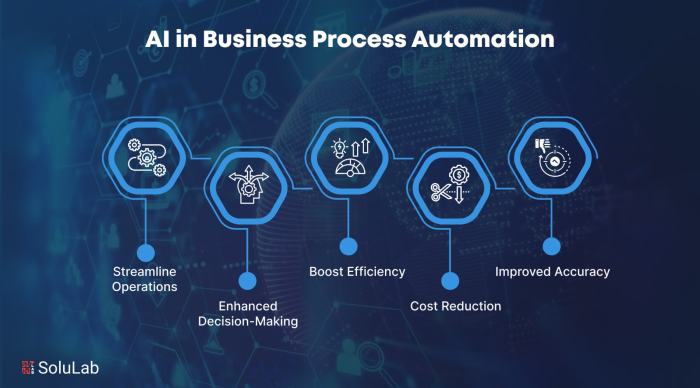
Implementing AI business automation tools can bring numerous advantages to a company, ranging from increased efficiency to cost savings. By leveraging AI technology, businesses can streamline processes, improve productivity, and make data-driven decisions more effectively
Enhanced Efficiency and Productivity
AI automation tools can handle repetitive and time-consuming tasks with speed and accuracy, freeing up employees to focus on more strategic and creative work. This leads to increased productivity as workflows become more streamlined and efficient.
Cost Reduction
Integrating AI tools into business processes can help reduce operational costs by minimizing human errors, optimizing resource allocation, and eliminating inefficiencies. This ultimately leads to cost savings for the company in the long run.
Improved Decision-Making
AI automation tools can analyze vast amounts of data in real-time, providing valuable insights and predictions to aid in decision-making processes. By utilizing AI technology, businesses can make more informed and data-driven decisions, leading to better outcomes and competitive advantages.
Challenges in Adopting AI Business Automation Tools
Implementing AI business automation tools can bring about significant benefits, but organizations often face various challenges along the way. These challenges can range from technical issues to organizational resistance.
Data Privacy and Security Concerns
One of the major challenges in adopting AI business automation tools is ensuring data privacy and security. With the increased use of AI tools, organizations need to handle large amounts of data, which can raise concerns about data breaches and compliance with regulations such as GDPR.
Ensuring that sensitive data is protected and that AI algorithms are secure is crucial in the adoption process.
Integration with Existing Systems
Integrating AI tools with existing systems can also pose a challenge for organizations. Legacy systems may not be compatible with AI technologies, requiring additional time and resources for integration. Ensuring seamless communication between different systems and data sources is essential for the successful adoption of AI automation tools.
Best Practices for Successful Deployment of AI Business Automation Tools
When it comes to deploying AI business automation tools, there are several best practices that can help ensure a successful implementation. From choosing the right tools to training employees, each step plays a crucial role in the overall success of the automation process.
Choosing the Right AI Tools for Specific Business Requirements
Before implementing any AI automation tools, it is essential to carefully assess your business requirements and identify areas where automation can bring the most value. Consider factors such as the complexity of tasks, data volume, and scalability needs to choose the most suitable tools for your specific needs.
- Conduct a thorough assessment of your current workflows to identify bottlenecks and areas for automation.
- Research different AI tools available in the market and evaluate their features and capabilities against your business requirements.
- Consider scalability and integration capabilities to ensure that the selected tools can grow with your business.
Tips for Effectively Implementing AI Automation in Workflows
Once you have selected the right AI tools for your business, the next step is to effectively implement them into your workflows to maximize their benefits. Here are some tips to ensure a smooth implementation process:
- Start with pilot projects to test the effectiveness of the tools in real-world scenarios before full-scale deployment.
- Collaborate with employees across different departments to gather feedback and insights for continuous improvement.
- Establish clear goals and KPIs to measure the success of the automation process and make adjustments as needed.
Importance of Training Employees for Successful Adoption of AI Tools
One of the key factors in the successful deployment of AI business automation tools is ensuring that employees are adequately trained to use these tools effectively. Training plays a crucial role in helping employees understand the benefits of automation and how to leverage AI tools in their daily tasks.
- Provide comprehensive training programs to familiarize employees with the AI tools and their functionalities.
- Encourage a culture of continuous learning and development to keep employees updated on the latest advancements in AI technology.
- Offer ongoing support and guidance to address any challenges or concerns that may arise during the adoption process.
Concluding Remarks
In conclusion, the dynamic synergy between AI Business Automation Tools and digital transformation underscores the immense possibilities and opportunities for businesses seeking sustainable growth and competitive advantage in today's fast-paced environment. Embracing these tools with strategic intent can pave the way for a successful and progressive business journey.
Questions Often Asked
What are the key benefits of AI Business Automation Tools?
AI tools enhance efficiency, productivity, and decision-making processes within businesses, leading to overall cost reduction and improved operational performance.
What challenges can organizations face when adopting AI Business Automation Tools?
Common challenges include data privacy concerns, security issues, and integration obstacles with existing systems. Overcoming these hurdles requires careful planning and strategic implementation.
How can businesses ensure successful deployment of AI Business Automation Tools?
By selecting the right AI tools tailored to specific business needs, providing adequate employee training, and integrating AI automation seamlessly into workflows, organizations can maximize the benefits of these advanced technologies.



![AI in B2B Sales: How It’s Used and Its Biggest Benefits [New Data]](https://digital.haijakarta.id/wp-content/uploads/2025/12/Sales-Automation-Tools-InsightSquared-Salesblink-120x86.jpg)